

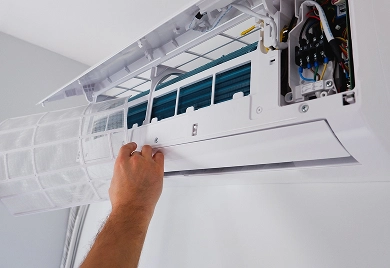
A Clear AC Drain Line Does Not Prove the Overflow Protection Is Ready
Condensate is a normal part of air conditioning operation. As warm, humid air passes over the cold evaporator coil, moisture collects and has to leave the system through the drain pan and drain line. In South Florida, an air conditioner can remove a great deal of moisture over a long cooling season. That makes drainage more than a housekeeping detail. A blockage, damaged pan, poorly operating safety switch, or problem with the drain route can allow water to reach ceilings, closets, floors, or other finished areas around the air handler.
A Common Misunderstanding
Clearing the drain line is useful maintenance, but it answers only one question. It does not confirm that the drain pan is sound, that the trap and drain route are configured properly, or that a float switch will stop the system when water rises where it should not. It also does not explain stains, corrosion, algae buildup, or signs of an earlier overflow. A tune-up that includes condensate protection should look at the drainage path as a group of related components. The purpose is not to invent a moisture problem. It is to confirm that the normal water produced by the system has a reliable path out and that the available safeguards are working as intended.
What We Check
We can inspect the accessible portions of the drain pan, drain line, trap, and safety switches, then test what can reasonably be tested during the visit. The air handler's location matters because a small overflow in an attic or interior closet may affect finished areas before you notices it. Access matters as well. If routine cleaning requires moving stored items, opening a difficult panel, or reaching a tight attic location, that should be discussed while the system is operating normally. We can also note evidence of past water around the unit so you have a baseline for future service.
A float switch is a safeguard, not a substitute for drainage maintenance. Its purpose is generally to interrupt operation when water reaches a particular point, which can limit continued condensate production and alert you that something needs attention. The switch location and the part of the drainage system it protects matter. A system may have more than one drain pan or safety device, and one switch should not be assumed to cover every possible leak path. The service explanation should identify what was tested and avoid turning the presence of a switch into a guarantee against water damage.
Homeowners can help by paying attention to changes rather than trying to diagnose the drain themselves. Water near the air handler, a suddenly inactive system after heavy cooling, a full secondary pan, staining below an attic unit, or repeated drain clogs are all useful details to report. The timing matters. A condition that appears after several humid days may give we different context from one that appears immediately after maintenance or construction near the drain route. Photographs can help if the water disappears before the appointment, provided they show the location clearly.
The area around the air handler should remain serviceable. Storage placed tightly around a closet unit, insulation covering an attic pan, or a route that is difficult to reach can turn routine inspection into a larger task. Homeowners do not need to create a finished workspace around the equipment, but we should be able to reach the access panels, drainage components, and safety devices that are part of normal service. If access is already limited, the maintenance plan should acknowledge it rather than assuming every part can be checked during a standard visit.
Repeated condensate trouble may also deserve a wider moisture conversation. A clogged line is a specific maintenance issue, but persistent water around the equipment, unusual indoor humidity, sweating surfaces, or drainage that repeatedly becomes overwhelmed may point to more than one condition. We can explain what was found within the air-conditioning system and whether another inspection is appropriate. The important point is to avoid treating every moisture symptom as the same drain clog or lowering the thermostat in hopes that the problem will disappear.
The Practical Takeaway
A tune-up should leave you with more than the statement that the line was cleared. The service record should explain what parts of the condensate system were inspected or tested, whether any sign of past overflow was found, and what maintenance or correction was recommended. If a concealed section of the drain cannot be evaluated, that limit should be stated rather than guessed. The result is a straightforward plan: keep normal drainage moving, confirm the accessible overflow protections, and address evidence of leakage before it becomes ordinary background damage around the equipment.