

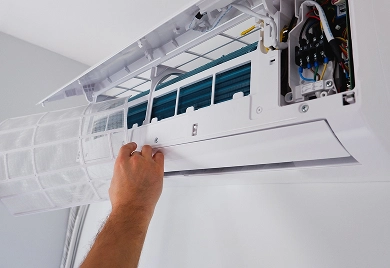
Temperature and humidity are separate measurements
A mini split can post a normal supply air temperature and still leave the room uncomfortable on humidity. Dry bulb temperature and moisture removal follow different rules. The evaporator must stay cold long enough, and air must move across the coil at sufficient velocity, or water stays in the air.
Homeowners often lower the setpoint when the room feels damp. That can add runtime without fixing latent load if fan mode ramps down early or the head satisfies the local sensor while closed spaces lag. We treat “not dehumidifying” as a measurable gap between sensible cooling and latent removal, not as vague discomfort. The first step is to separate equipment failure from control strategy.
Fan mode and runtime logs
Auto fan on many remotes reduces airflow as the room nears setpoint. Cooling stops or shortens while moisture remains on surfaces and in closets. Dry or dehumidify modes, when the unit supports them, hold different coil and fan profiles.
Not every condo install includes a dedicated dehumidify menu. Some owners run a lower setpoint to force longer cycles. That increases electric use and may still miss closed rooms. On a humid afternoon, note how many minutes the head runs continuously, the fan setting on the remote, and whether supply air at the grille is cold. Send those three items with photos of the indoor unit and any drain stain.
- Short runs with cold air at the head: control or fan strategy first
- Long runs, cold supply, high humidity house wide: coil, charge, or whole home moisture path
- Water at the cassette or musty odor at one head: drain and mini split repair
- No cold air at all: A/C repair before humidity talk
Condo layout and line set length
High rise and mid rise buildings sometimes run line sets near manufacturer limits. Length, vertical lift, and outdoor unit location affect capacity tables. A head that cools the living room can still struggle in a closed bedroom on the same circuit if doors block air mix.
Association rules control roof and balcony access. Lift scheduling and insurance requirements should be on the work order when you book through contact us. Filter screens at the cassette must match factory size.
Gaps allow bypass air that loads the coil without showing up as a filter alarm on the remote. Outdoor clearance still matters on setbacks and balconies. Restricted condenser airflow raises head pressure and can change how long the indoor coil stays in a dehumidifying range.
Measurements we take on site
Technicians record supply air temperature at the head, ambient conditions, suction and liquid line readings when ports allow, and condensate flow at the drain line. We compare remote commands to actual fan stage and valve operation. Miswired or misconfigured boards can report cool air while the coil profile is wrong for moisture removal.
Charge is verified against manufacturer data for the measured indoor and outdoor conditions. Low charge can produce cold supply at the grille with poor latent performance and high humidity in the space. When coils, drains, and charge test within spec and humidity stays high in every room, we discuss whether dehumidifier services fit the floor plan. That is a separate scope from a standard service call on the ductless unit.
Misreads we correct on the first visit
Owners sometimes request refrigerant because the room feels damp. Charge testing may still run, but fan strategy and run time often explain the symptom first. A lower setpoint can add electric cost without moving relative humidity if cycles shorten at the head sensor.
Window leakage and ventilation from corridors can add moisture that no mini split will fully offset during short cycles. We document whether the complaint is one room, one head, or the whole condo before quoting equipment changes. Portable humidity meters in two rooms at the same time give better context than a single reading at the remote.
Maintenance and follow up paths
Restricted drains and dirty indoor screens show up on humid weeks before owners notice humidity numbers. Maintenance plans schedule those checks before stains or odors appear. Whole home odor, dust, or moisture questions may need indoor air assessment after the head tests clean. Coverage for Miami Dade, Broward, and Palm Beach is on service area. Company background is on about. Related ductless notes sit on the blog, including how room use affects ductless sizing. Call (305) 255-6671 with run time logs and fan settings. That context shortens the first visit. Head model and serial, line set length estimate, and outdoor unit location go on every ductless humidity ticket.
We note whether the condo uses hurriance impact glass and how often sliders stay closed. Drain route to outside wall or to internal pan is sketched when the path is visible. Filter screen part numbers are recorded when screens are missing or damaged. Association contact for roof access is stored when the outdoor unit is not from the balcony. We list adjacent rooms that share open doors versus closed doors during the test. Remote photos of fan mode, setpoint, and timer use are attached when owners send them. Humidity readings at the head and in the complaint room are logged with timestamp. The written summary lists measured supply temperature, approximate run time, fan mode used during the test, and whether the drain produced steady flow. We state if dehumidify mode exists on the equipment and whether it was exercised during the visit.
When coil cleaning resolves moisture complaints, that outcome is recorded with before and after supply and return notes. When charge correction is required, the ticket references the manufacturer chart used and does not quote flat rate refrigerant without measurement. If condo rules blocked outdoor access, the report records that limit and lists what was deferred. Recommendations for whole home dehumidification are separated from mini split repair line items so owners can approve each scope. Photo attachments include the indoor filter screen, drain outlet, and nameplate when association rules allow. The next maintenance interval is stated based on filter type, occupancy, and coastal exposure. A photo of the remote display with fan mode visible saves one question on the first call. A photo of water or stain at the wall cassette shows drain urgency before mildew spreads into drywall. Outdoor unit photos from the balcony show clearance without a roof visit when access is blocked.