

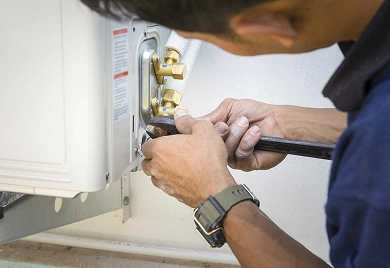
How we define short cycling
Short cycling means the compressor or packaged unit starts and stops before a normal cooldown completes. Cycles under roughly five minutes on a hot afternoon are worth logging. Write start time, stop time, and room temperature at stop for three consecutive cycles.
Note if the pattern began after filter type change, duct work, thermostat replacement, or power outage. Short cycles increase wear on contactors and capacitors. They usually leave indoor humidity high even when the stat reaches setpoint briefly.
Oversize, controls, and refrigerant
Oversized cooling relative to sensible load can satisfy the stat quickly and shut off before the coil removes moisture. The equipment may be mechanically sound and still short cycle. Low charge, failed capacitors, restricted metering devices, and dirty coils produce different measured splits, amp draws, and coil temperatures. Diagnosis runs through A/C repair and heat pump repair with gauges and electrical tests. Replacing a thermostat without airflow and charge data often repeats the same pattern.
Duct leakage and return starvation
Supply leaks to attic or crawl space dump conditioned air outside the envelope. The stat may keep calling because room sensors never see the cooled air that left the duct. Return leaks pull hot unconditioned air into the system.
Both leak types change runtime and can mimic short cycling or endless running depending on location and size. Pressure testing and visual inspection belong under air duct and vent repair. Internal debris may need air duct cleaning as a separate scope when documented, not when the only symptom is restriction.
Triage from the vent
Weak air at every supply after a new filter suggests blower or restriction issue. Weak air at one room suggests local duct failure. Ice on the coil with short cycles points to airflow or charge, not duct leak alone. Water at the air handler points to drain before duct replacement. Closed interior doors on single return homes change runtime and can look like equipment short cycling until doors are opened for test.
Booking and maintenance
Maintenance plans reduce failures that appear as abrupt cycle changes mid season. Indoor air complaints with odd cycling may add indoor air assessment. Stat relocation questions go to thermostat installation. Schedule at contact us or call (305) 255-6671. Send cycle logs and filter type. service area, about, blog. Run time under five minutes with falling supply temperature often points to oversize or charge. Run time under five minutes with flat supply temperature may point to failing capacitor or compressor. Long run with no setpoint reach may point to duct leak or return restriction. We log outdoor unit amps at start and at five minutes when safe to measure. Filter delta pressure is estimated from manufacturer data when racks are odd sizes. Thermostat heat anticipator and cycle rate settings are checked on older stats.
Zoning damper position is noted when multiple zones exist. Recent remodel dates help explain new short cycle patterns. Uneven dust at supplies can hint at leak location but is not proof. Temperature at the closest supply versus farthest supply on the same system is logged. Return grille noise change when a door opens suggests return path dependence. New vibration after remodel may mean flex disconnected at the boot. Systems that never satisfied stat after duct cleaning may still leak to attic. Foam board seals at boots are visual only and still need pressure confirmation when possible. We state when only occupied rooms were tested due to tenant limits on commercial jobs. Homeowner cycle logs over twenty four hours beat single afternoon snapshots. When duct repair is recommended, the report estimates how many boots or returns were involved without promising leakage percentage without test. When equipment repair is recommended, failed parts are listed with measurements, not only part names.
If both duct and charge issues exist, the report orders work so airflow is corrected before final charge adjustment. Homeowner cycle logs attached to the ticket are referenced in the conclusion paragraph. We state if icing was present at the coil during the visit because icing changes cycle interpretation. If zoning is present, damper labels and observed positions are recorded. Thermostat wiring changes in the last year are noted because bad wiring mimics short cycle. The summary tells the owner what to watch for over the next forty eight hours after repair. Loose wire at the contactor can cause chatter that sounds like short cycle from the curb. Failed run capacitor can prevent compressor from staying online even when the stat still calls. Dirty contactor points increase amp draw and heat, leading to protective shutdown. High head pressure from blocked condenser can trip high pressure switch on short cycles. Low voltage at the outdoor unit from panel issues can cause erratic compressor run. We note if the symptom appears only after the unit ran in heat mode earlier the same day.